

April 2026 Mediator Spotlight John Derrick is a full-time mediator...
Read More
October 2026
With a judicial family background, attorney-mediator Mark Ameli brings a deeply human perspective to dispute resolution. His culturally informed approach begins with promoting understanding, grounded in honesty and genuine human connection.
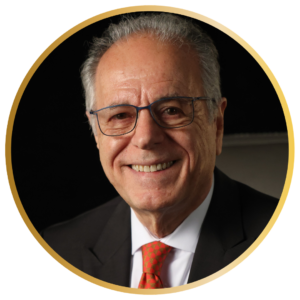
Mark Ameli
About Mark
Mark K. Ameli, Esq. is the first Iranian American attorney in California to practice tort law, workers’ compensation law and business law, and he was among the first Iranian American attorneys in the United States of America. His career and experience as an attorney span over 40 years in the areas of general business, including the preparation and negotiation of contracts, the formation and administration of corporations, partnerships, and limited liability companies; business litigation; personal injury matters; worker’s compensation cases; and real estate matters.
Career and Perspective
I grew up in a family where dispute resolution and justice were frequent topics of conversation. My father was a judge who took great pride in administering justice. After gaining some legal experience, I learned that I could volunteer for the Los Angeles Superior Court’s alternative dispute resolution program. I joined, beginning my ADR practice about 35 years ago.
Initially, the court offered only arbitration, and judges referred cases valued at less than $50,000 to nonbinding arbitration. When the program expanded to include mediation, I became involved in that as well.
Along the way, I participated in training programs offered by the Los Angeles Superior Court, the Los Angeles County Bar Association, Pepperdine’s Straus Institute, and Harvard. The more I studied conflict resolution, particularly mediation, the more I recognized its importance—not only in resolving legal disputes, but also in promoting understanding in the world and serving our shared humanity.
Just as I was becoming comfortable with my knowledge of conflict and conflict resolution, an experience in a contract case, in which I represented the plaintiff, opened my eyes to something I had overlooked and believed other mediators often missed: the influence of cultural differences on negotiation, on what parties consider a satisfactory resolution, and on the path to reaching an agreement.
Personal
One less secret part of my life is that I was born in Iran and came to the United States in 1966, 60 years ago. What I have not shared as widely is another love of mine. Aside from my love for my wife, children, and grandchildren, I have a lifelong love of skiing.
I began skiing in Iran when I was 14 or 15 and brought that love with me to the United States. Forty-two years ago, a few ski buddies and I decided to take an annual trip to a ski resort outside the United States, usually during the first week of February. That decision became a tradition.
Over the years, we have skied at most of the major resorts in Italy, France, Austria, and Switzerland, as well as resorts in Andorra and Japan. I am including a couple of photographs to share a glimpse of this part of my life.
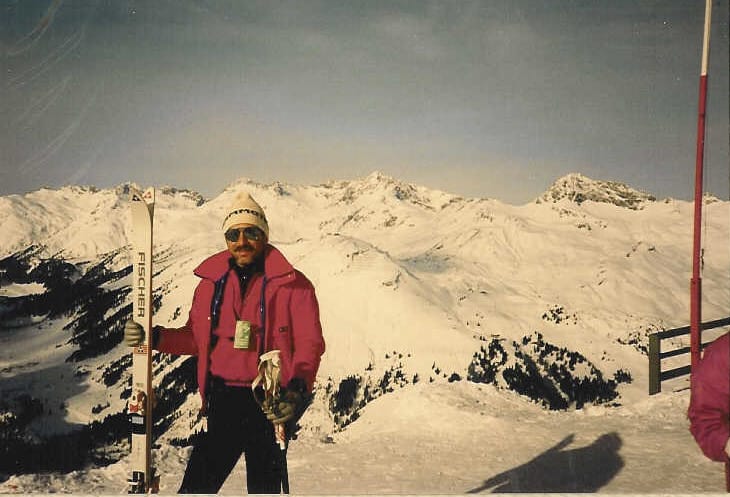
I began skiing in Iran when I was 14 or 15 and brought that love with me to the United States. Forty-two years ago, a few ski buddies and I decided to take an annual trip to a ski resort outside the United States, usually during the first week of February. That decision became a tradition.
Inside the Mediation Room
I believe cultural issues have an important but subtle influence on mediation that counsel often overlook. Recognizing these issues can be even more challenging when mediations take place online.
One example illustrates the point. In a personal injury mediation, the plaintiff was a Chinese woman about 30 years old. The case appeared straightforward, yet for approximately two hours, I moved between the plaintiff’s room and the defense room without making progress. I could not get the young woman to speak openly with me, and her attorney offered little insight into her reluctance.
On one of my trips to the plaintiff’s room, I noticed two men of Asian descent sitting in the waiting room. I asked her attorney whether they were connected to the case. One was her father; the other was her brother. After a brief conversation with them, I learned that she relied on her father’s judgment in making the decision, while her brother was there to interpret for him when needed. Once her father joined her in the mediation room, we settled the case in short order.
The lesson was not to assume that every Chinese family approaches decisions in the same way. It was to recognize that family roles and cultural expectations may influence how a particular person makes decisions. Counsel should explore those relationships beforehand and, with the client’s agreement, ensure that anyone whose participation is important to the client’s decision is included in the mediation.
Philosophy and the Human Element
When I speak about the human element in mediation, I mean that the parties and the mediator need to connect on a human level. The parties should feel that their experiences have reached the mediator, and the mediator should respond in a way that reaches them. Establishing this connection can be challenging, particularly across cultural differences, and even more so over Zoom. Another essential element is honesty.
Recognizing how easily cultural issues can be missed led me to research cultural negotiation and mediation. That research became a paper available to interested readers on my website, www.amelimediation.com.
One of the most effective ways to establish a connection is to listen—not merely to the words, but to the person behind them. This means hearing and understanding stories that may appear unrelated to the case. Those stories can reveal cultural nuances that even the party’s own attorney may not have discovered. Body language can also offer insight into feelings or concerns that words alone do not convey. Through this attentive listening, the parties feel understood, and a meaningful connection develops.
By honesty, I mean that I will not sacrifice the truth about the facts or the law simply to achieve a settlement. The parties should trust that I will give them my candid assessment, acknowledge uncertainty, and address both the strengths and the weaknesses of their positions. Whether or not the case settles, the parties should leave feeling heard and knowing that the relevant facts and law were discussed honestly.
Interested in working with Mark?
Mark is available for mediation through MCLA.
To request his services, contact us at info@mediationla.org
Mark is available for mediation through MCLA.
To request his services, contact us at info@mediationla.org

Mediator Spotlight: David Coher
March 2026 Mediator Spotlight This month we welcome spring by...
Read More
Mediator Spotlight: John Glowacki
February 2026 Mediator Spotlight This month, MCLA is pleased to...
Read More
Mediator Spotlight: Sean Judge
January 2026 Mediator Spotlight Meet Sean Judge, MCLA mediator and...
Read More